Farmers' National Federation – a grassroots movement in constant transformation

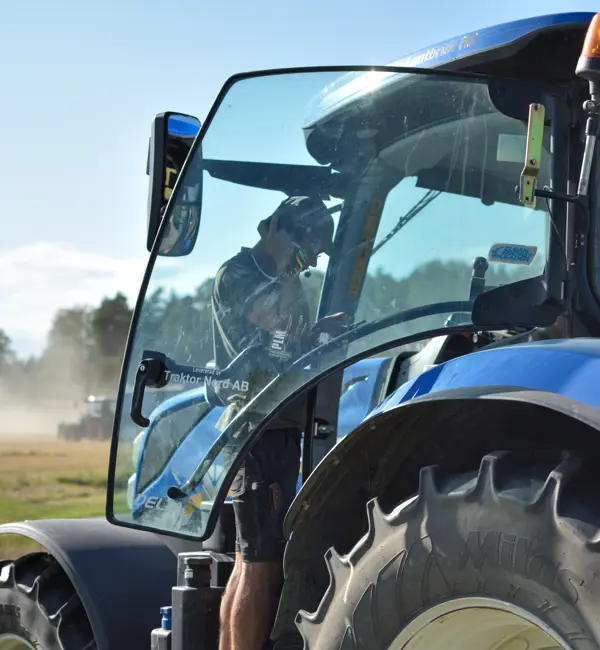
Behind the work of the Farmers' National Federation (LRF) lies both history, social impact, and a strong belief in the future. Here, everything is about creating conditions for Sweden's green industries to grow, develop, and influence. In a world where conditions are constantly changing, LRF is a voice, a driving force, and a unifying power for what actually puts food on our tables.
From state grain prices to GPS-controlled tractors
What we today know as LRF – the Federation of Swedish Farmers – emerged in the 1970s when two farmer organizations merged. It was a different time then. The state set the prices for milk and grain, and LRF negotiated on behalf of its members. Since then, much has changed. Deregulations, EU membership, and structural shifts have shaped a new landscape for Sweden's farmers.
”We are an industry in constant transition. It requires financial muscle, curiosity, and an interest in technology to run a large operation within the green sectors. Today, tractors are controlled by GPS and milking is done via robots,” says Johan Tufvesson, head of digital channels at LRF. ”It is an exciting industry with a fast pace – but also great challenges.”
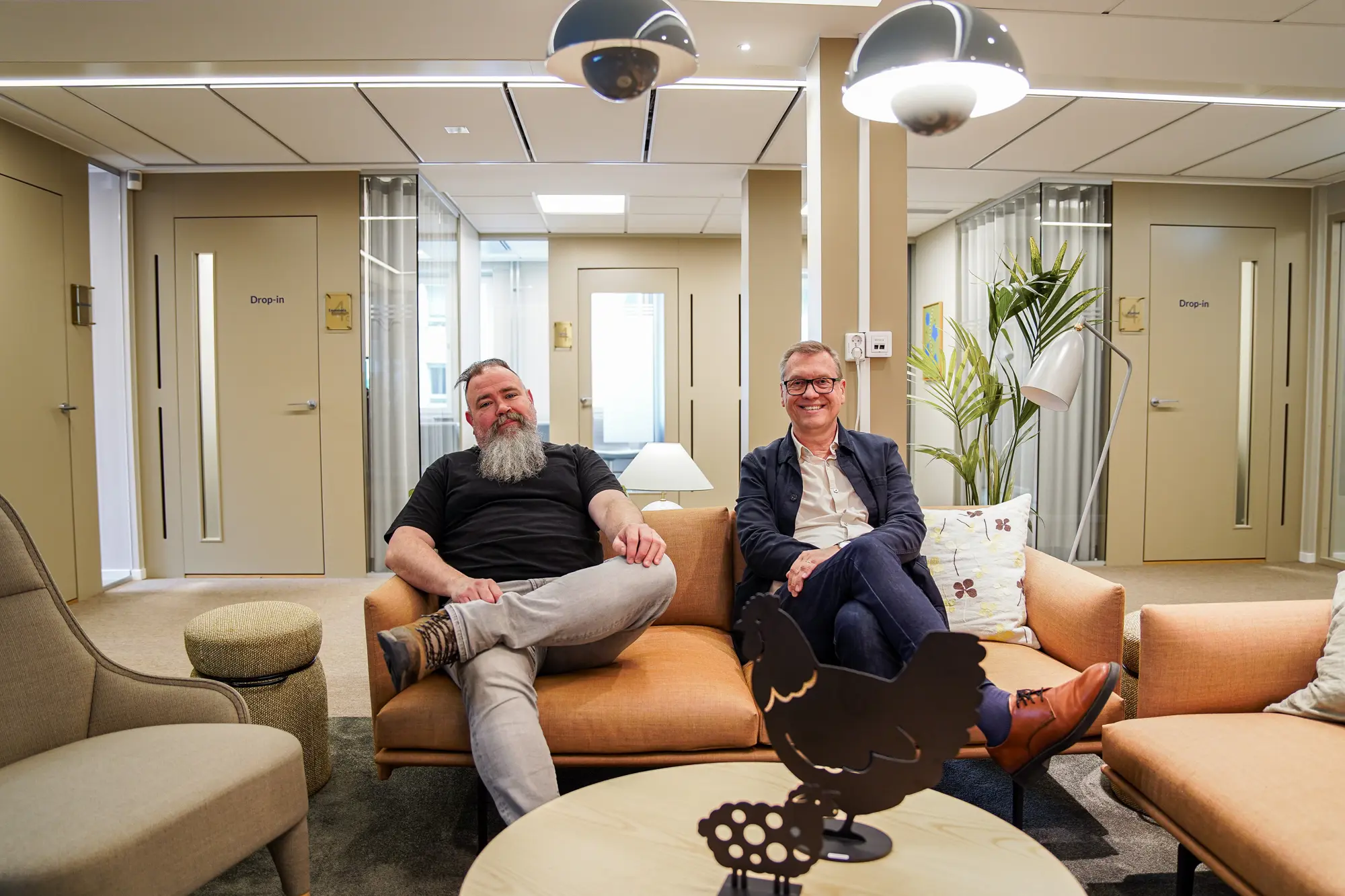
Fr. Left: Ola Ekstrand, business developer web at LRF. Johan Tufvesson, Head of digital channels at LRF | Photo: Hannah Sundberg
From scattered voices to unified influence – synchronized communication as a key tool
With its 120,000 members, LRF is both Sweden's largest business organization in the green sectors and a vibrant grassroots movement. Local engagement and democratic processes characterize everything from municipal departments to the national federation meeting.
”We stand on two legs,” says Johan. “One is the local presence, the other is the strong agricultural policy mandate. Together, this gives us a unique position to drive issues that make a difference for our farmers on a daily basis.”
For LRF, communication is not just a way to reach out – it is one of the organization's most important tools for gathering voices from across the country and making them heard where it really matters. In an organization where opinions and needs vary between industries, regions, and members, structured solutions are required to keep the whole together. Through digital platforms, targeted flows, and smart formats, conditions are created for dialogue, engagement, and real influence – both locally and nationally. This is how LRF transforms diversity into impact.
Ola Ekstrand has followed LRF's digital journey from the inside for over a decade – a journey he has actively helped to drive forward. When he started, he was somewhat of a one-man army, responsible for both the website, intranet, and social media. Today, he leads the work on LRF's web platform in close collaboration with the communications department and the development team at Toxic.
”Communication is absolutely crucial in an organization like ours. It is how we gather, engage, and influence,” says Ola. “We want to create digital tools that make it easier for our members to

Photo: The Swedish Farmers' Association

Photo: The Swedish Farmers' Association

Photo: The Swedish Farmers' Association
Challenges and transition – both locally and globally
The green industries are undergoing a significant transition. Farms are closing down, operations are merging, and those that remain need to grow substantially to be economically sustainable. This means that the number of farmers is decreasing – while the demands are increasing. Today's farmers need to be entrepreneurs, employers, technology specialists, and sustainability strategists all at once. Investments in GPS-controlled tractors, milking robots, and digital tools are no longer exceptions – they are prerequisites for continuing operations.
At the same time, society around is changing. Regulations are becoming more numerous and complex, young people are struggling to enter the industry, and profitability is being pressured as global competition and climate challenges affect the entire food chain. For LRF, this means a constantly ongoing effort; to support both those already in the industry and pave the way for the next generation of entrepreneurs in agriculture, forestry, gardening, and food.
“We have a strong local presence, but we also need to be where decisions are made – at the municipal level, in regions, and in Brussels,” says Johan. “We are not focusing on one thing or another – we must be everywhere.”
And it is precisely at the intersection of local presence and national impact that LRF's mission becomes most clear: to bring together voices, experiences, and needs from across the country – and transform them into concrete influence. Through advocacy, industry policy expertise, and member-focused communication, LRF builds bridges between everyday life on the farm and decision-making in the highest echelons of society. In this work, LRF becomes not just a voice for its members – but a driving force for an entire industry in transition.

Photo: The Swedish Farmers' Association

Photo: The Swedish Farmers' Association

Photo: The Swedish Farmers' Association
Forward – with sustainability and relevance as guiding stars
The future for LRF is about both embracing the grassroots movement and increasing efficiency. Some initiatives that lie ahead include strengthening the brand, developing more common tools for the regions, and investing in future industries.
“We want to continue to be relevant,” says Johan. “It’s about sustainability, innovation, and creating the best possible conditions for running businesses in the green sectors. This is not a luxury issue – it’s a matter of food on the table.”
When we leave the House of the Green Business, it is clear that LRF is more than an organization – it is a context. A network of people, ideas, and engagement that together shape the future of Sweden's green industries.
It is about much more than tractors, harvests, and forests – it is about securing access to food, caring for the landscape, and creating vibrant communities across the country. In a time when global crises, climate challenges, and rapid technological development impose new demands, a force is needed that can gather, drive, and show the way.
LRF is just that force. And the more complex and fast-moving the world becomes, the more important their mission becomes: to be the link between land and politics, between individuals and society – and to give a voice to those who cultivate, harvest, produce, and build our common future.

In the Green Business House, companies and organizations work with the common goal of wanting to solve societal challenges using the earth or forest as a resource. There is a restaurant in the building. Of course, with a focus on locally produced and good ingredients | Photo: Hannah Sundberg

In the foyer, you are met by a cow, which reinforces the common purpose of the house | Photo: Hannah Sundberg

The walls are adorned with artworks associated with the activities of the Swedish Farmers' Association | Photo: Hannah Sundberg

Read about our digital solution for the Farmers' National Federation
For the Farmers' National Federation, it is important that the member is in focus, as well on their website. Furthermore, they wanted to modernize the design, improve performance, and focus on user-friendliness. The new website is modern, user-friendly, and tailored to the needs of the members and editors. The site offers personalized communication, based on interests, a logged-in area for the elected representatives, and tools for editors.
Read more

The entrance to inspiration – at Essem Design, everything starts in the hallway
When you open the door to Essem Design's office in Anderstorp, you are greeted by an atmosphere that feels welcoming, warm, and thoughtful – just like the products they create. The hallway is the company's heart and soul, and at Essem Design, there is an unwavering belief that the first place you encounter should be something truly special. "The hallway is more than just a passage; it is an introduction to everything that awaits," says CEO Robert Bladh as we settle down among beautifully designed coat racks and hooks.

A vision rooted in greenery – Svegros journey towards a self-sufficient Sweden in green
As we turn off the winding country road and approach Färingsö, it feels like we are stepping into another world. The radiant autumn sun bathes the landscape in a golden glow, and the colorful leaves on the trees frame Svegros greenhouse, which majestically spreads out over the expanses. The fresh air fills the lungs, and the gaze meets rows of green, where herbs and lettuce thrive under careful supervision. It is a place where the beauty of nature meets modern technology and where a passion for sustainable cultivation permeates every square meter.

Nature, adventure, and the future – Isaberg creates experiences for everyone
When you turn in towards Isaberg Mountain Resort, you are greeted by a view that breathes adventure and the tranquility of nature. The mountain rises majestically in the background, surrounded by forests and the sparkling lake. The atmosphere is inviting, and everywhere you see signs of the many opportunities that await – bike paths, hiking trails, ski facilities, high ropes course, pump track, disc golf, and the toboggan run that winds down the slope – yes, the list of activities is long. "Here it's about getting closer to nature, whether through adventure or calm activities," says Louise Söderlund, CEO of Isaberg. Nature is the heart of every experience, and Isaberg creates memories for life in every corner of the facility.

The history, craftsmanship, and sustainability – Furhoffs Rostfria unites the past and the future
When you step into Furhoffs Rostfria in Skövde, you are greeted by a unique combination of industrial precision and history. The factory, which has stood strong for 125 years, feels both timeless and innovative. The robust architecture bears witness to the company's development over the years – building by building has emerged, as capital has been available for expansion. Every corner carries traces of the journey the company has made – from a small copper smithy to a leading player in stainless steel.

Gnosjö Automatsvarvning – A motor for the industry's future
At Gnosjö Automatsvarvning, the lathes always stand firm, but it is the people and traditions that drive the company forward. In the heart of the Gnosjö spirit, they have built a business that combines decades of craftsmanship with a striving to be at the forefront technologically. Here, precision is not just a requirement – it is a pride that permeates every detail and every workday.

Ravema – The industrial partner that builds the future
Stepping into Ravema is like entering a world of precision, technical expertise, and strong long-term customer relationships. With over a century of experience, Ravema has grown to become one of the leading industrial partners in the Nordics with a vision not only to provide its customers with products but also with knowledge and support that empower them for the future.

Hooks Herrgård – where every guest feels seen, heard, and cared for
When you turn off the road and the majestic manor facade emerges between gnarled oaks and vast meadows, you immediately understand that this place carries a special history. Here at Hooks Herrgård, visitors have been drawn since Baron Stedt's days in the 18th century. Today, it is the bold investments, the strong family bond, and the constant desire to give that little extra that makes the place live and breathe both tradition and modern comfort.

Where it all began and still exists – the story of Golvabia
It smells of wood, persistence, and Småland ingenuity when I step into Golvabia in Anderstorp. Here, in a landscape where entrepreneurship is as deeply rooted as the needles in the forest, a family business has not only survived for 75 years but has grown, refined, and developed without ever losing its footing. Literally.

From the apartment to the continent – the story of Beslag Design
When I step through the doors of Beslag Design in Båstad, I am already greeted in the entrance by what the company has built its entire identity around: careful details that just feel... right. Further into the conference room, the assortment spreads out along the walls; handles, knobs, hooks tastefully arranged. We sit down to hear Pontus Eklind, CEO of Beslag Design, tell how the journey began but, above all, where they are headed.

Where the ridge meets the sea – the story of Norrvikens trädgårdar
There are places that do something to you even before you understand why. Norrvikens trädgårdar on the Bjäre Peninsula is one such place. Here, where Hallandsåsen meets the sea and a favorable microclimate allows the impossible to bloom, a man's vision has lived on for over a hundred years; through storms, crop failures, changes of ownership, and a period of decline that almost became the end – but it did not.

We are live with the web for AmpSociety – part of ChargeNode Group
ChargeNode Group takes an exciting new step forward with the launch of AmpSociety – a new company and brand focused on the future of charging solutions for electric vehicles. AmpSociety is part of ChargeNode Group and is launching the new charging system Amp5. Together with us at Toxic, they have now launched a completely new product and brand website, built on Litium, which lays the foundation for continued success.
2min

Create a powerful e-commerce solution with Umbraco Storefront and Norce e-commerce platform
In a time when e-commerce is developing rapidly, it is crucial to have a flexible, scalable, and user-friendly platform. For companies managing large product catalogs and complex product variations, the combination of Umbraco Storefront and Norce's e-commerce engine is a winning solution.
3min

Effective advertising with Google Ads: Tips for increased visibility and sales
Digital advertising is changing rapidly, and to stay ahead, a strategy that combines data, creativity, and continuous optimization is required. Here, we share important insights and strategies to maximize the effectiveness of your Google Ads advertising, ensuring you get the most out of your budget.
3min

Toxic initiates new collaboration with KABE
We have initiated an exciting collaboration with KABE, one of Sweden's leading manufacturers of caravans and motorhomes. As part of the collaboration, we are developing a new website in Umbraco – a platform that will reflect KABE's premium feel while also making it easier for both visitors and editors to navigate and manage content.
2min

Get more out of your SEO – simple adjustments for better visibility
Do you want more people to find your website? Here are some practical SEO tips that you can start with today to increase your visibility and give your digital presence a boost.
3min

Our team has grown – meet our six new employees!
We are so happy to welcome six new employees to Toxic! Meet Peter, Emma B, Josef, Petter, Linus, and Emma R – a wonderful group that together strengthens our team with valuable skills and drive.
7min

Kläppen Ski Resort chooses Toxic to build a new website in Umbraco Cloud
Kläppen Ski Resort is investing in a new, modern website in Umbraco Cloud to create a more customizable digital experience. The website will provide visitors with the right information at the right time, reflect the facility's offerings and seasonal changes, and integrate with the booking system for a smooth and cohesive customer journey – whether the guest is already on-site in Kläppen or planning their visit.
3min

Umbraco takes home five wins at the CMS Critic Awards 2024!
Five wins at the CMS Critic Awards. What does it say about Umbraco – and about the CMS market in general? We spoke with Daniel Andersson, Tech Lead at Toxic, to get his perspective on why Umbraco continues to dominate and what it means for companies looking for the right platform.
3min

How did Swedish e-commerce perform in 2024 – and what lies ahead?
The E-barometer 2024 from PostNord shows that Swedish e-commerce has turned upward. After two years of decline, revenue increased by 5% to 140 billion kronor. The report offers more than just numbers – it highlights trends that shape the future of e-commerce. In this blog post, we highlight some of the year's most important insights and a glimpse of what lies ahead.
2min

How to build a profitable B2B business digitally – insights from Nordic Digital Commerce 2025
B2B e-commerce is no longer a question of "if" but "how". In Lithium's report Nordic Digital Commerce in B2B 2025, it is clearly stated that digital channels are not just a way to streamline internal processes, but above all a way to improve customer relationships and create growth. Here, Oscar Salomonsson, business area manager E-commerce at Toxic, shares concrete advice for creating a profitable digital B2B business in 2025.
3min

Switching from Optimizely to Umbraco – why more companies are choosing to make the move
Are you wondering if your current CMS is worth the cost? You are not alone. More and more companies are reviewing whether they are really using all the functionality they are paying for and are choosing to switch from licensed platforms like Optimizely to open source alternatives like Umbraco. Kalle Ekstrand, founder of Toxic and sales manager, explains why this step often becomes a boost for both the team and the business.
3min