Web accessibility – inclusion for all
Learn how accessibility optimization is not just a legal obligation but also a strategic advantage that can open the door to a larger market. Read more to understand how you can develop more inclusive and user-friendly digital solutions.

What is WCAG?
Web Content Accessibility Guidelines, abbreviated WCAG, is a set of guidelines designed to increase accessibility on the internet for users with disabilities. The guidelines focus on making information accessible, such as text, images, audio, code, and tagging. This practically means that you, for example, provide a text alternative as a complement to visual elements or that your visitors can access information by listening instead of reading. You broaden access to information and make it available to a wider audience, simply put.
Book a meeting
In the meeting, we will go through your goals, current situation, and how we can assist you further with accessibility adjustments.

Ensure that your website is accessible – book an accessibility analysis
Our accessibility analysis provides you with an overview of how your website, e-commerce, or digital service meets accessibility requirements. We identify areas for improvement and deliver concrete action proposals, so you can ensure that your website not only complies with the law but also offers a better experience for all users. With our analysis, you get a clear basis for taking your digital presence to the next level while ensuring that you meet upcoming requirements.
Choose the package that best suits your business.
From 9,900 SEK.
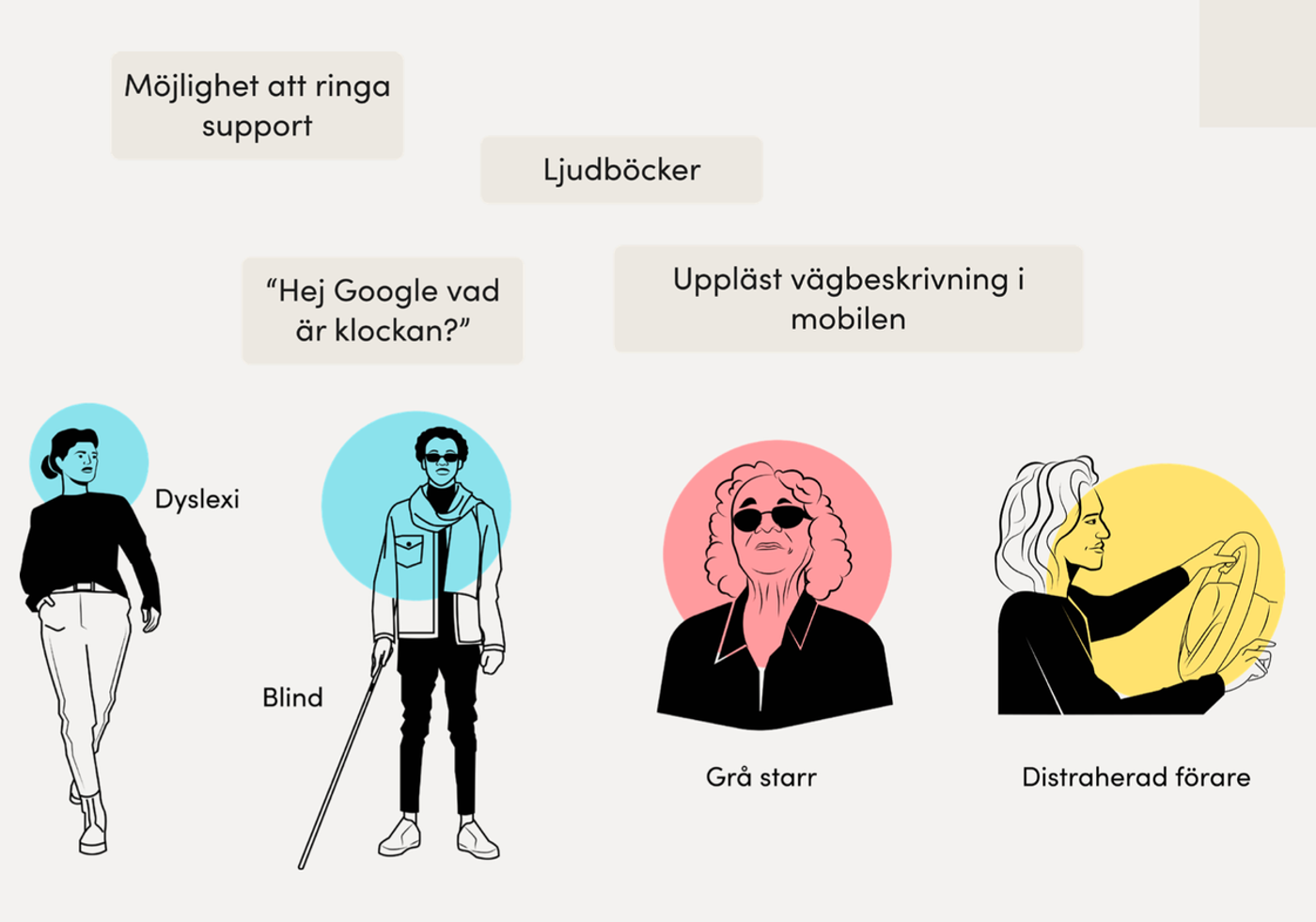
Who is affected...
Accessibility opens the door to a broader audience. When more people can use your solution, the chances for more business also increase, especially if competitors have not made these adjustments. Accessibility also goes hand in hand with good UX design (design focused on usability). The user experience becomes more positive when people can use your solution in a way that suits their needs. This builds trust in the solution and the company, which in turn often generates more business.
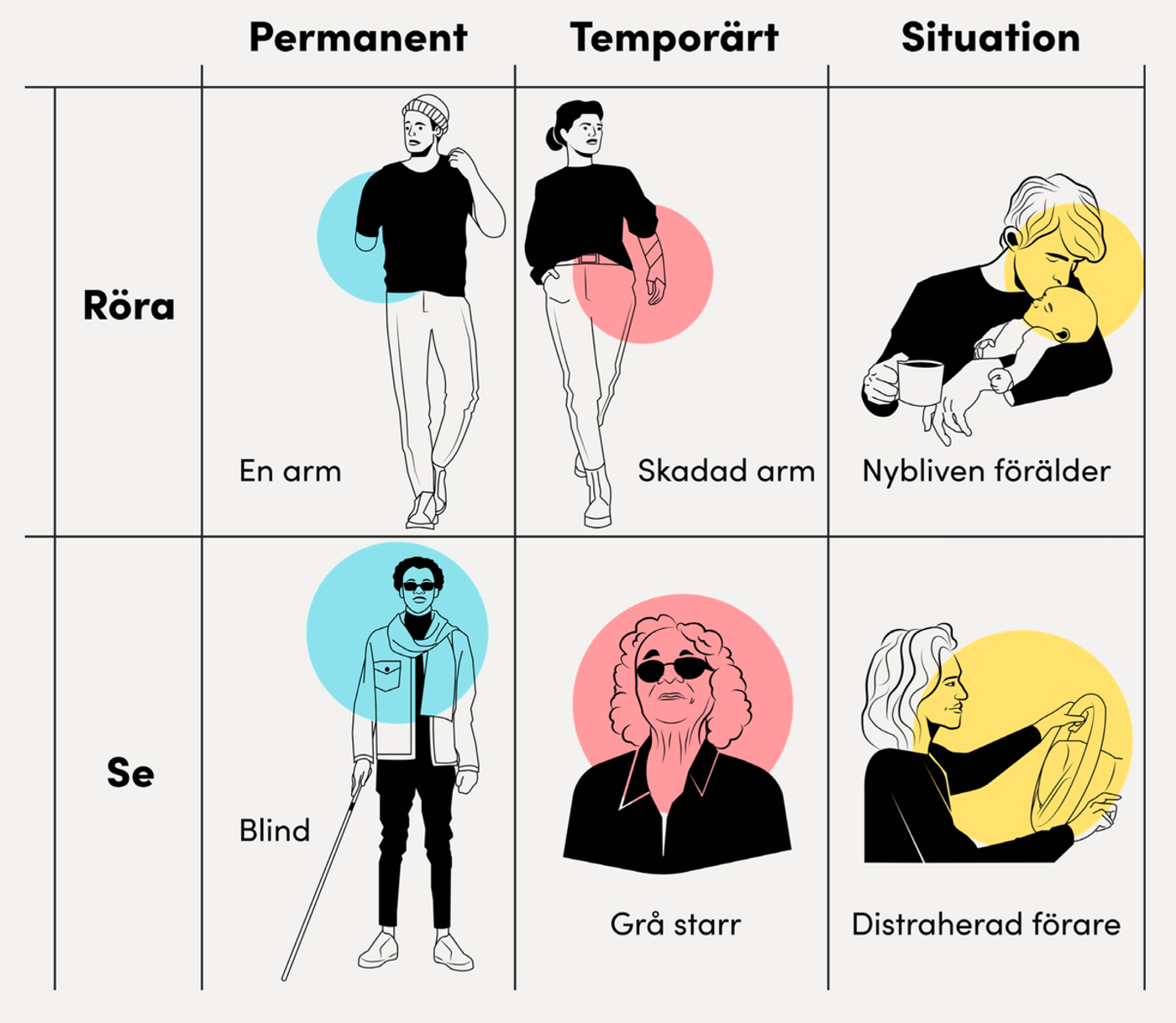
...and who benefits?
Studies also show that 82% of visitors with disabilities are more willing to return to a company that has accessibility solutions. Not making accessibility adjustments is the same as not keeping up with future technology. One prediction is that more users will demand accessibility; if a solution has not adapted, these users will find another that has.

Gnosjö Automatsvarvning
Gnosjö Automatsvarvning has initiated a digitalization project with us at Toxic to develop System ONE – a platform that will streamline internal processes and complement the company's existing systems to meet future needs. As the first step, a presence module is now operational, which improves safety and efficiency in the business. In this case, we focus on how this subproject within System ONE has helped Gnosjö Automatsvarvning to digitalize its attendance management.

Lanbrukarnas Riksförbund (LRF)
When we at Toxic were tasked with redesigning The Federation of Swedish Farmers' (LRF) current website, we began to clarify what challenges LRF saw with the existing website and where the focus should be for the new website.

Svenska Innebandyförbundet
Toxic has developed a new website on the Umbraco platform and is now responsible for its management and further development. As part of the project "Floorball 2.0," Toxic has also successfully implemented integrations with the Floorball app and iBIS, creating a seamless management of information between the systems.

How do we at Toxic work with accessibility?
At Toxic, we prioritize accessibility at every step of our web development process to ensure that all visitors have an optimal experience. Behind the scenes, we work intensively with technical solutions that make websites user-friendly for everyone, whether the visitor uses a screen reader, cannot use a computer mouse, or has other special needs.
Our methods include integrating hidden labels on interactive elements, clearly marking navigation in menus, and creating self-explanatory links, all while maintaining an aesthetically pleasing design. We guarantee that our solutions combine functionality with style - accessibility should not be ugly!

Accessibility – a given process in our development
To further increase accessibility, we ensure that color contrasts and text sizes are optimized so that individuals with visual impairments or color blindness can easily navigate and access the content. Our team also places great importance on educating other developers and editors about the importance of accessibility, including how to create clear image descriptions for better understanding with screen readers and for users with slower internet connections.
Our commitment extends beyond technical aspects; it encompasses a continuous process of knowledge sharing and innovation to constantly improve and refine our accessibility strategies.
Book a consultation meeting
Do you think that accessibility adaptation feels complicated and difficult? Then you are not alone. We help many companies and organizations understand what their next steps are. Schedule a meeting with us and we will help you clarify the questions and find a good way forward!
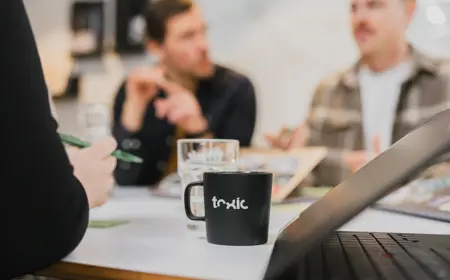
We design for accessibility
We have integrated accessibility checks as part of our design process. This means that we always adapt what we can, regardless of the project. Since UX goes hand in hand with accessibility, we see it as a given that our design should be adapted accordingly.

Our approach
We create appealing and user-friendly solutions with people at the center. This means that we keep their needs in mind when we design and build. It creates a good solution that solves problems and generates satisfied users, which in turn leads to more and more loyal users.

Central control, local freedom: who decides what on the group's websites?
When many companies share a platform, new questions arise. Who gets to change what and which content should be managed centrally? Here we describe how corporations can organize editorial work so that it becomes both efficient and secure.
2min

Template or custom? Two paths for the corporation's websites
All companies in a group do not have the same needs. A smaller subsidiary may need a simple website that can be set up quickly, while a larger company may require a completely custom solution. In this blog post, we describe how groups can combine a common template with tailored solutions.
2min

After the listing: how to manage the IR website in everyday life
The listing day is just the beginning. Then come quarterly reports, annual meetings, press releases, and changes in management, year after year. An IR website that was ready on time but is difficult to manage quickly becomes a burden. In this blog post, we go through what the IR year usually looks like and what makes management easy.
2min

New company in the group: how the web will be set up without starting over
Every acquisition raises the same question: what do we do with the website? Without a common foundation, the answer is often a new web project from scratch. Here we describe how a common platform makes it faster and cheaper to connect new companies.
2min

IR-webb in two languages: therefore, the investor information needs to be available in English.
Foreign investors own a large portion of the shares on the Swedish stock exchange. For them, the English IR website is the company's face to the outside world. Yet, the English version is often thinner or less updated than the Swedish. Here we go through why language matters and how you can keep both versions up to date.
2min

Can the group's companies share a web platform and still maintain their brands?
When a group wants to consolidate its websites, a common concern is that the companies will lose their identity. However, a shared platform does not mean that all websites have to look the same. Here we explain how multiple brands can share technology and features while still having their own expression.
2min

This is how you keep the corporate governance section of the IR website up to date: Content and update procedures
The corporate governance section of the IR website is often the one that is updated the least frequently and therefore becomes outdated the easiest. At the same time, this is where investors and analysts look for information about who is in charge of the company and how. Here we go through what content is usually available and how it can be kept updated.
3min

Ten companies, ten websites: when is it time to consolidate the group's websites?
In many corporations, each company has its own website, built at different times by different agencies in different systems. It works for a while, but over time the websites become expensive to manage and difficult to overview. Here we go through the signs that it is time to consolidate the websites and what the corporation gains from it. As an example, we explain how Toxic and Industrireklam consolidated the Weland Group's companies into Weland Light, a common template in Umbraco where changes are rolled out to multiple websites simultaneously.
3min

On the way to the stock market: this needs to be on the web by the listing day
Before a listing, the checklist is long. The website often ends up far down, even though it must be ready and accurate on the same day the stock starts trading. Here we go through what the website needs to be ready for at the listing and how you can plan the work so that it doesn't become a bottleneck.
2min

Multiple facilities, one web platform: how to simplify everyday life for the editors
At many destinations, the hotel, restaurant, ski resort and campsite each have their own website, developed independently over time. The result is duplicated work for content editors and a fragmented experience for guests. In this article, we explore what happens when multiple websites are brought together on a single platform and how Isaberg Mountain Resort approached the challenge.
3min

5 reasons why large organizations and associations choose Umbraco as a CMS
Many large organizations and associations are using CMS solutions that have become too expensive, too complex, or simply no longer fit the business. Editors struggle with things that should be simple, and the technology begins to set limits on what the organization can do. After working with organizations such as LRF, the Tenants' Association, and several sports federations, we see some recurring reasons why the choice often lands on Umbraco CMS.
3min

Why more and more companies are digitizing their B2B sales and how it works
Many B2B companies still receive orders via email, phone, or through their salespeople. It often works well at first, but as the number of customers and order volumes grow, it becomes difficult to keep the information updated and the process becomes too time-consuming. This is one of the most common reasons why more B2B companies are now taking the step towards their own e-commerce platform. In this post, we will go through how orders are often handled today, what problems it creates, and how a digital platform changes the picture.
3min

Umbraco + AI: What exists today and what is on the way?
To say that AI development is progressing at a frightening pace may not be sticking your neck out directly. New models are coming almost every day, and the development does not seem to be slowing down anytime soon. But how can one implement and benefit from it in Umbraco? We will clarify that in this post!
7min

Therefore, you should stop stressing about your AI ranking.
The question arises everywhere: “How do we rank in ChatGPT?” It's a good question because AI search is starting to become an important channel for digital marketing and no one wants to risk falling behind. But before you hire someone who promises to “optimize your AI ranking,” you need to know something. There is no real ranking.
2min

That's why you are losing customers in your B2B trade - and what you can do about it.
In B2C e-commerce, the purchasing experience often revolves around inspiring and enticing. In B2B, it's the opposite. Customers already know what they want, they have probably ordered it before and want to do it again – as quickly and smoothly as possible. Yet, it is surprisingly common for B2B stores to be built with the same logic as consumer retail. This creates unnecessary friction, frustrates customers, and leads to manual work that no one really has time for. So, what does a truly smooth purchasing experience look like in B2B?
3min

When do organizations need to rebuild or redesign their website?
Many organizations use their website for many years without major changes. This is rarely a problem in itself – a website does not need to be rebuilt just because it is old. The problem arises when the technology, content, or visitors' needs have changed more than the website has managed to keep up. It is not always easy to see where the line is between "this we can fix" and "this requires us to rebuild from scratch." Here are four signs worth taking seriously.
3min

Where the ridge meets the sea – the story of Norrvikens trädgårdar
There are places that do something to you even before you understand why. Norrvikens trädgårdar on the Bjäre Peninsula is one such place. Here, where Hallandsåsen meets the sea and a favorable microclimate allows the impossible to bloom, a man's vision has lived on for over a hundred years; through storms, crop failures, changes of ownership, and a period of decline that almost became the end – but it did not.

Common problems on large websites and how they can be solved
The larger a website grows, the harder it becomes to manage – both for those who visit it and those who work on it every day. What was once a clear structure with a few sections becomes, over time, hundreds of pages, countless subcategories, and content that has been added in batches over several years without a common plan. The result is rarely noticeable all at once; instead, it sneaks in until one day the visitor can no longer find what they are looking for, while the editor no longer knows where something should be. Now we will go through some of the most common problems on large websites and what usually tends to solve them.
3min

Why system integration is important in e-commerce
Many companies that sell through e-commerce do not work in a single system, but many work in several at the same time. The business system handles orders, inventory, and finance, the CRM manages customer relationships and the sales process, and the e-commerce platform is what customers actually encounter. If your systems do not communicate with each other, much of the work ends up being about moving information manually between them, and that is rarely where time should be spent.
2min

That is why many organizations choose to switch CMS
A CMS, a content management system, is the tool an organization uses to publish and update content on its website. Most organizations chose their CMS a long time ago (often five, ten, or fifteen years ago) and have since built upon it year after year. Over time, it becomes harder to live with the choice one once made. Licenses become more expensive, editors find it increasingly difficult to work in the system, and what once felt flexible starts to feel like a hindrance. Let’s go through some of the most common reasons organizations choose to switch CMS and what they often want to achieve with the change.
3min

What is required of a good IR website?
Trust is what determines how a publicly traded company is perceived by investors, analysts, and shareholders. Much of that trust is built or lost on the web. An IR website (Investor Relations) is the place where investors, analysts, and shareholders turn when they want to understand how the company is doing and where it is headed. For a publicly traded company, the website is not just a communication channel; it is part of how the company fulfills its information obligation to the market. If an IR website is difficult to navigate or lacks the right information, it costs more trust than one might think. In this blog post, we will therefore go through what an IR website actually needs to contain and what distinguishes a good IR website from one that is just there out of obligation.
4min
Frequently asked questions about accessibility optimization
WCAG stands for Web Content Accessibility Guidelines and is a set of international guidelines for how web content can be made more accessible to people with disabilities. WCAG is developed by the World Wide Web Consortium (W3C) and consists of three levels of conformance: A, AA, and AAA.
Starting in 2025, new requirements for digital accessibility for websites, digital services, and e-commerce in Sweden and the EU will be implemented. These requirements mean that all public and many private entities must ensure that their digital content and services are accessible to all users, including people with disabilities.
Accessibility optimization means making a website usable for as many people as possible, including individuals with various types of disabilities. This can include improving the readability of text, ensuring that the website can be navigated using a keyboard, and using alternative text descriptions for images.
The new requirements entail an expansion of accessibility requirements to include more digital services and products. It now also encompasses e-commerce and digital services that were previously not included. Furthermore, usability and accessibility for all are emphasized, which means that design decisions should consider a broader user base.
Accessibility optimization can help your business reach a wider audience, improve user experience, and increase customer satisfaction. It can also contribute to improving your search engine optimization (SEO) and reduce the risk of legal issues related to discrimination.
Adapting to WCAG rules can be challenging depending on your current website structure and design. However, it is entirely possible with the right knowledge and tools. Many companies choose to implement changes gradually and to work continuously on improvements to achieve full compliance.
There are many resources available, including W3C's own guidelines and documentation, online courses, webinars, and accessibility tools. There are also consultants and agencies (Hello hello 👋🏽) specialized in accessibility that can offer support and advice.